

Many of us had our first real look at a sheriff’s office back in 1960 when Sheriff Andy Taylor and his fearless deputy, Barney Fife, patrolled the roads around Mayberry, North Carolina.
Television took us inside the Mayberry jail, the courthouse, Andy’s home, and even allowed us to ride along in the county patrol car. And for many people, Andy Taylor’s Sheriff’s Office became the standard, the template against which all real-world law enforcement would be measured, even if they didn’t realize it.
The things Andy did, well, that’s what a sheriff was supposed to do: fight crime, run the jail, serve the people of the community, spend quality time with family and friends—Aunt Bee, Barney, Opie, Floyd, Gomer, and Miss Ellie and later, Helen—and pickin’ and grinnin’ with the Darlings while Charlene belted out the lyrics to her signature song, There Is a Time. Simply a wholesome lifestyle of work and play, of moral clarity and small-town justice dispensed with a smile and maybe a slice of Aunt Bee’s Nesselrode pie.
But that’s the television depiction of a county sheriff’s life, rendered in black and white, with a laugh track and commercial breaks. Real sheriffin’, however, is a bit different, grittier, more complex, weighted down with bureaucracy and budget constraints and the kind of human darkness that wouldn’t have made it past the 1960s television network censors.
So let’s take a brief look at a real-life sheriff and her or his office to see how things differ from that fictional agency where jail cell #1 was empty most of the time, and the occupant of #2 was usually Otis sleeping off another snootful of moonshine.
One Sheriff Per Office—Understanding the Basics
First, like Andy, a sheriff is only one person, a single elected official who’s in charge of the day-to-day operations of their office. This is crucial to understand. In most jurisdictions, the sheriff is elected by popular vote, which means they answer directly to the people, not to city councils, county supervisors, mayors, or state bureaucrats. It’s a uniquely American institution, this elected lawman, with roots stretching back to medieval England and the shire reeve who collected taxes and kept the king’s peace.
Because there is only a single sheriff for each jurisdiction, it is in error to call or address the other employees of the agency as “sheriffs.” This is a common mistake, one I hear all the time, and it’s worth correcting, especially for crime writers aiming for touches of realism, because precision in language reflects understanding of the system itself.
“A couple of sheriffs came to my house to deliver a jury summons. A waste of tax money, ’cause one coulda’ done it.”
“Look, here comes four sheriff’s cars. Bet they’s headin’ straight to Junior, Jr.’s house to bust up the still he runs in the woods behind that stinkin’ hog pen of his.”
“Two sheriffs went next door and arrested Jimmy Buck for bustin’ onery ol’ Larry John, Jr.’s head with a rusty claw hammer. Should’ve gave him a medal for doin’ it, instead of arrestin’ him, if you ask me.”
“There’s three sheriffs over yonder, eating donuts and drinking coffee at Delirious Daisy’s Donut Diner.”
All wrong. Every one of them.
So, to reinforce this critical point: there’s only one sheriff per office. One elected official wearing that gold sheriff’s badge and the brass insignia boldly spelling out “SHERIFF” on their shirt collar and carrying that full weight of responsibility that comes with the job. And since the sheriff has many duties, more than any single person could possibly handle alone, they need help to fulfill those obligations.
Consequently, the sheriff appoints deputies to assist with the workload. They carry the sheriff’s authority but serve at the elected sheriff’s pleasure, meaning most can be hired or fired without the civil service protections enjoyed by the majority of municipal police officers.
These are deputy sheriffs, or simply deputies. They often wear brown over tan uniforms with silver badges and silver “DEPUTY” collar insignias. You’ll see them on patrol, serving warrants, working the jail, transporting prisoners, providing courthouse security, and handling all the daily calls that come in—the domestic disturbances, burglaries, assaults, traffic accidents, and property crimes that make up the standard bread and butter of law enforcement.

The sheriff certainly has the authority to work cases, and could strap on a sidearm and go out on patrol or kick down a door on a drug warrant, but more often than not, they spend their days managing budgets, participating in various meetings, dealing with personnel issues, and navigating the political waters that come with being an elected official whose job depends on convincing voters they deserve another term.
Therefore, the drivers of those marked “sheriff’s” cars and others who work at a sheriff’s office are typically deputy sheriffs, not the actual sheriff. Unless, of course, the boss, the actual sheriff, happens to be driving one of the marked units, which does happen from time to time, particularly in smaller counties where the elected official still likes to get out from behind the desk and work the roads.

A Sheriff’s Authority
There are 3,081 sheriffs in the United States, typically elected constitutional officers who answer directly to the voters. This is a crucial distinction. While police chiefs serve at the pleasure of those who appointed them, subject to the political winds and administrative whims of municipal government, sheriffs hold their authority by popular mandate. They’re elected to serve, typically for four-year terms, though some states require six years, others three, and a handful only two. It’s democracy in its rawest form: if the people don’t like how you’re running things, they vote you out on election day.
In many areas, the sheriff is the highest-ranking law enforcement officer in the county, wielding authority that extends across every incorporated town, every unincorporated community, every stretch of county road and country lane within their jurisdiction. This jurisdictional reach is broader than that of municipal police, who are generally confined to city limits.
A duly sworn sheriff’s deputy can make an arrest anywhere in the county, whether it’s in a city, town, or village, even those with police departments, or in the one-stoplight towns thirty-three miles away at the far southwest corner of the district. Those crossroads towns are sometimes just out of radio range, where backup practically needs a full tank of fuel for the trip. It’s important to note that solo deputies should have the ability to talk their way out of a jam, especially when it’s them against a gaggle of combative folks who enjoy throwing a punch or two at the face of a cop. And yes, those incidents are to be expected, and they do occur. It’s all part of being a deputy sheriff.
Duties and Responsibilities of a Sheriff
The responsibilities of a sheriff’s office are as varied as the landscape itself, ranging from mundane bureaucratic tasks to the grimly essential work of maintaining order and protecting the innocent.
Consider what a sheriff might be responsible for on any given day:
Executing and returning process—serving all civil papers, from divorce decrees to eviction notices to lien notifications. Every piece of legal paper that requires hand delivery is dispensed by a deputy, who must then return proof of service to the clerk of court. It’s tedious work, often thankless, but it’s the machinery that keeps the justice system grinding forward.
Attending and protecting all court proceedings. Courtroom security falls to the sheriff’s office, which means deputies standing post during trials, maintaining order when tempers flare, and ensuring that witnesses, jurors, and judges can go about their business without fear of violence or intimidation.
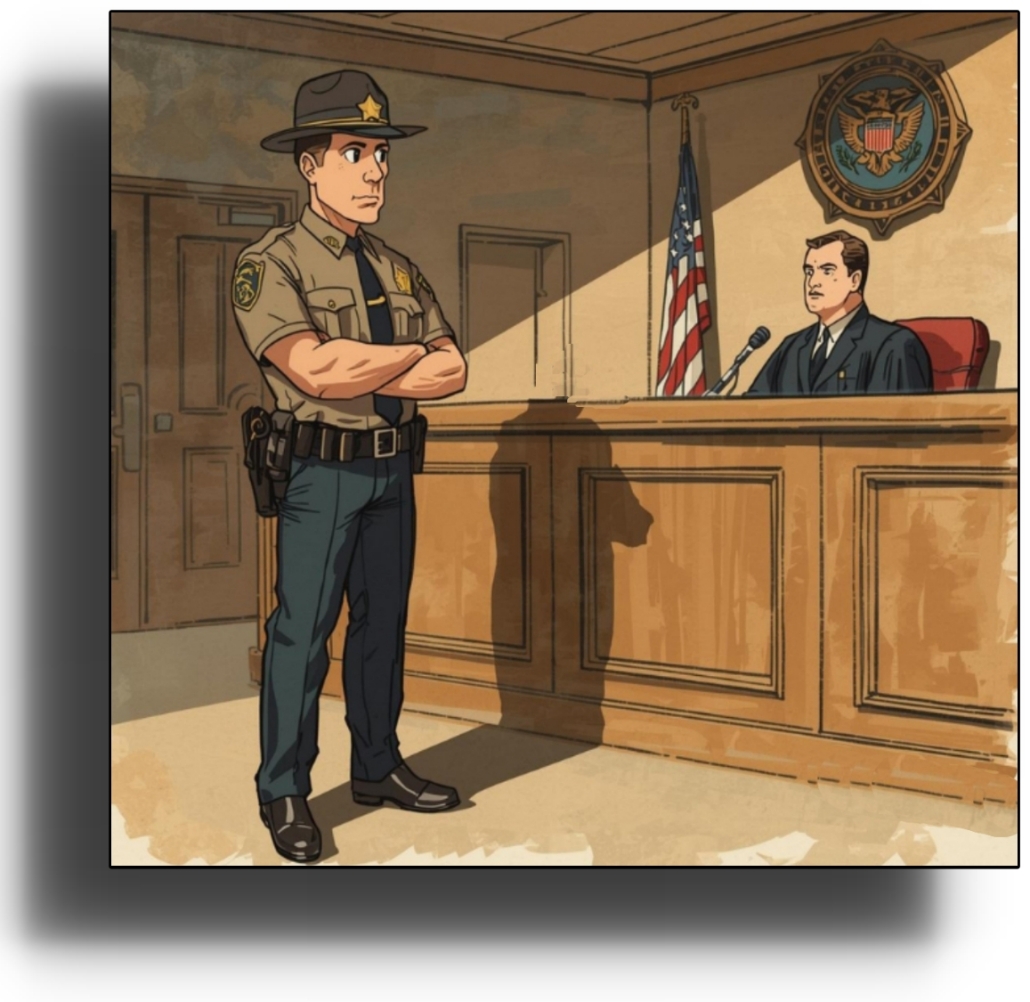
Preserving order at public polling places is a duty as old as democracy itself, ensuring that citizens can cast their votes without harassment or interference.
Publishing announcements regarding the sale of foreclosed property and conducting the public auctions that follow. There’s something particularly stark about watching a sheriff auction off someone’s home on the courthouse steps, the American dream reduced to line items and a gavel coming down with the finality of a judge’s sentence. But it’s a part of a sheriff’s duty that must be done.
Serving eviction notices and, when necessary, forcibly removing tenants and their property from homes or businesses. I’ve known sheriffs who use jail inmates, supervised by deputies, to haul belongings from houses out to the street—furniture and family photos and a lifetime of accumulated property and debris piled on the curb like garbage while a family stands watching, their faces sometimes hollow with the knowledge that they’ve got nowhere to go.
Serving as coroner. In California, for example, some sheriffs also serve as coroners of their counties, which means they’re responsible for investigating deaths, determining cause and manner, and maintaining the dignity of the deceased even when that dignity has been stolen by violence or neglect or the simple cruelty of circumstance. Since sheriffs are typically not medical doctors, they employ forensic pathologists and their staff to perform autopsies and necessary testing.
Maintaining the county or city jail and transporting prisoners to and from court appearances, then on to state prison after sentencing. Running a jail is a massive undertaking—feeding inmates, providing medical care, preventing suicides and assaults, managing the constant flow of bodies in and out. In some counties, the jail is the sheriff’s primary responsibility, consuming the bulk of the budget and staffing.
Law enforcement—in many areas, if not most, the sheriff is responsible for patrol, criminal investigations, and all the other functions we typically associate with police work. Some towns don’t have police departments, but nearly all jurisdictions must have a sheriff’s office. The exceptions are Alaska, which has no county governments; Connecticut, which replaced sheriffs with a State Marshal System; and Hawaii, where Deputy Sheriffs serve in the Sheriff Division of the Department of Public Safety, but there are no elected sheriffs.
The Spectrum of Sheriff’s Offices—Cops, or Not?
The scope and scale of sheriff’s offices vary greatly across the nation, from the Los Angeles County Sheriff’s Department, the largest in the world, employing a staff of nearly 18,000—a force greater than the combined populations of Wyoming’s Sublette and Johnson Counties—to the other end of the spectrum, a small rural office where a lone sheriff and maybe three or four deputies cover hundreds of square miles of territory, responding to calls that might be nearly an hour’s drive from the office. Sometimes a single deputy patrols an entire county alone, so they’d better be danged sure of what they’re doing before they step out of that patrol car.
But not all sheriff’s offices perform typical law enforcement duties. In some jurisdictions, the role is primarily administrative and judicial rather than investigative and enforcement-oriented.
The State of Delaware provides a clear example of a sheriff’s office that operates without on-the-street crime-fighting or crime-solving. The Philadelphia Sheriff’s Office is a second model of a sheriff’s office whose functions are primarily administrative and judicial.
Delaware Sheriff’s Offices
The state is small, consisting of only three counties, each with an elected sheriff—Scott T. Phillips in New Castle County, Robert T. Lee in Sussex County, and Norman R. Barlow in Kent County. These sheriffs and their deputies have no typical arrest authority or other standard police powers. State law simply doesn’t permit it.
They can take someone into custody and transport them only when specifically ordered by a judge or a commissioner of Superior Court, but they’re not out there making traffic stops, investigating crimes, or kicking in doors to serve search warrants. Their responsibilities are limited mainly to serving legal notices, such as subpoenas, levies, and summons, and conducting sheriff’s sales for non-payment of taxes and mortgage foreclosures.
Patrol and criminal investigations in Delaware are handled by the Delaware State Police, who perform the functions sheriffs handle in most other jurisdictions.
Philadelphia Sheriff’s Office
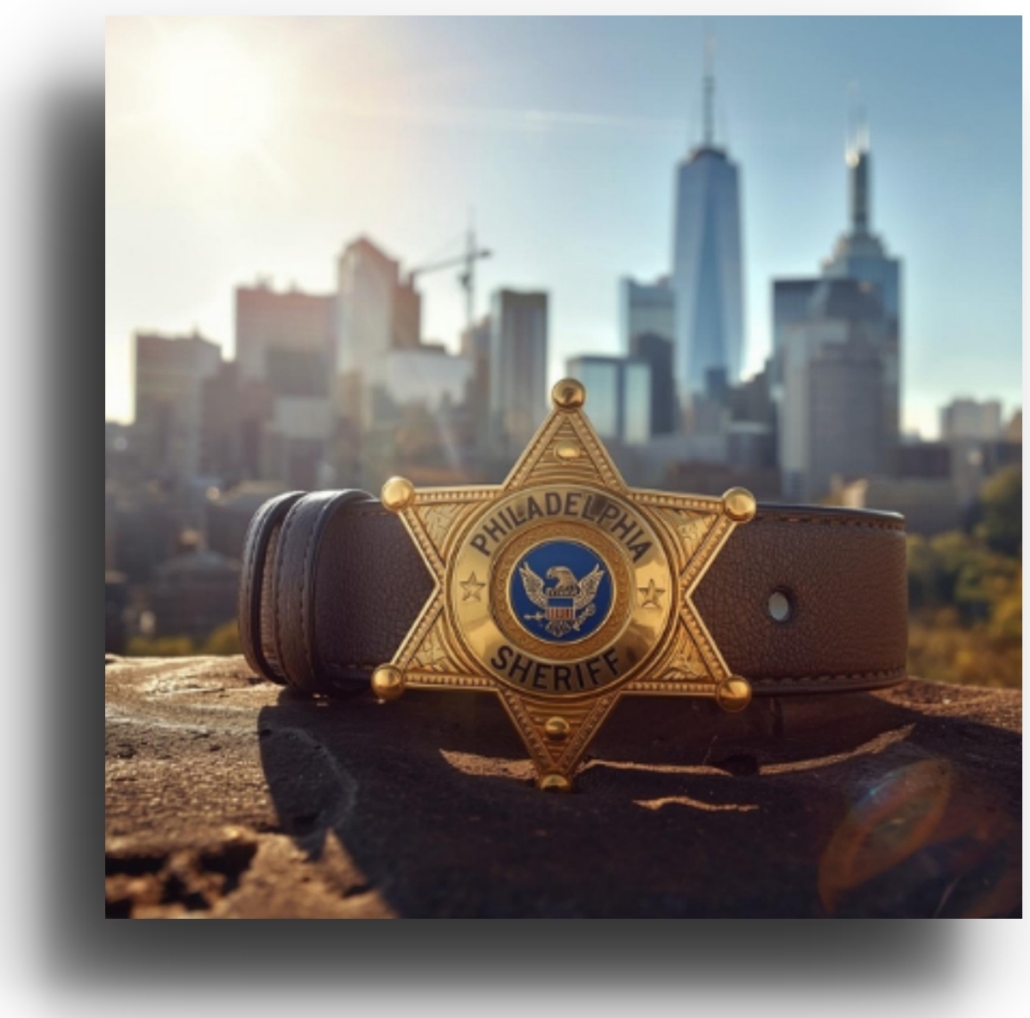
Like Delaware sheriffs and their deputies, the Philadelphia sheriff, Rochelle Bilal, and her deputies are not authorized to conduct patrol or criminal investigations, nor do they direct or oversee municipal policing.
Philadelphia sheriffs’ deputies are not the law enforcement officers that locals typically see out and about in the community, arresting criminals, conducting traffic stops, and investigating crimes. They’re not involved in high-speed vehicle chases, homicide investigations, SWAT raids, or suiting up in riot gear. They don’t walk beats, handcuff burglary and robbery suspects, collect evidence at crime scenes, or conduct DUI stops.
Instead of typical law enforcement functions, the 428 employees of Sheriff Bilal’s office conduct the majority of their business inside courtrooms, providing security, delivering court papers, conducting court-ordered evictions, or assisting the sheriff with sales of foreclosed and tax-delinquent properties. They also execute court orders and serve bench warrants issued by the courts, such as a capias for failing to appear for court hearings or trials.

It’s essential work, the machinery that keeps the judicial system functioning, but it’s a different model entirely from what most Americans think of when they picture a sheriff whose office is the primary law enforcement agency in the county.
This is true of several sheriff’s offices across the United States, and the reason is the way local laws are structured. Each jurisdiction shapes its law enforcement agencies according to its own constitution, statutes, and, sometimes, even historical traditions.
Philadelphia Municipal Policing
In Philadelphia, municipal policing—patrol, criminal investigations, and the rest—is the responsibility of the Philadelphia Police Department, headed by Philadelphia Police Commissioner Kevin J. Bethel, not the Philadelphia Sheriff’s Office.
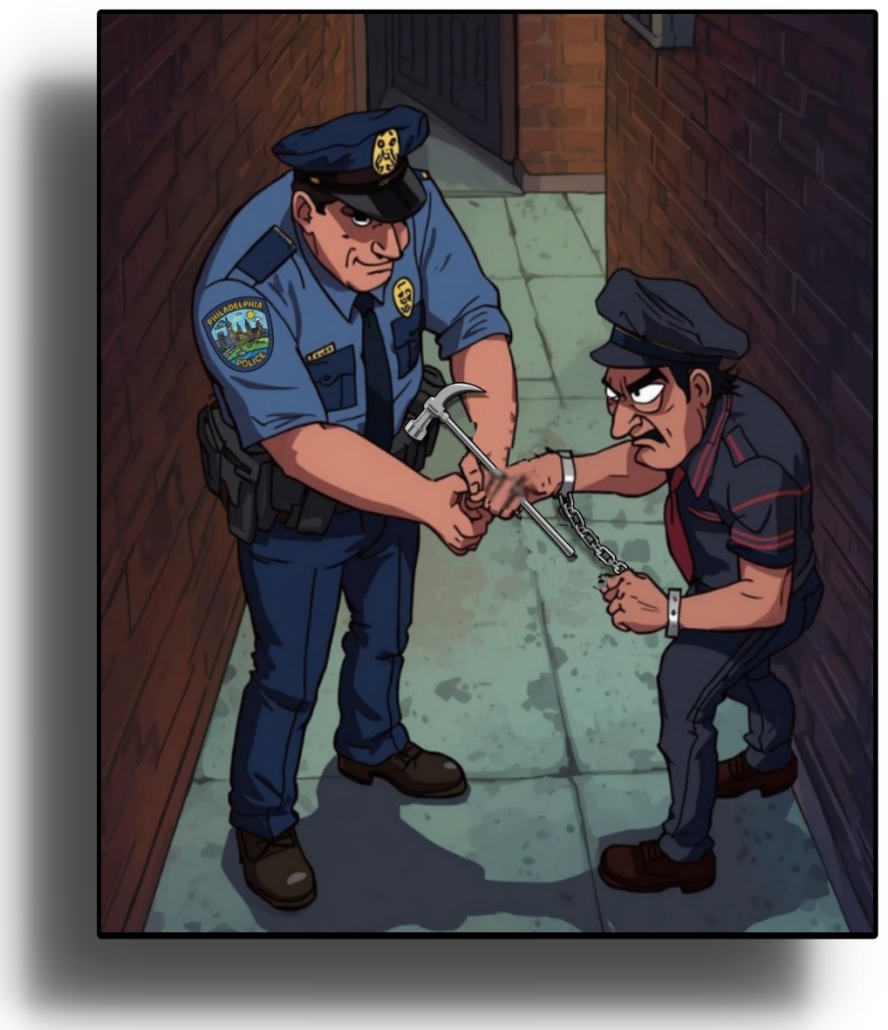
Additionally, the Pennsylvania State Police have statewide jurisdiction, including within Philadelphia proper. Patrol troopers assigned to Troop K in the Philadelphia area provide patrol and criminal investigation services in conjunction with the Philadelphia Police Department. They’re also responsible for regulating traffic and enforcing traffic laws, responding to and investigating crime scenes, and maintaining public order and security, the typical law enforcement duties most people associate with police work.
Goochland County Sheriff’s Office, Goochland, Virginia—Sheriff Steven N. Creasey
Sheriff Creasey began his career with the Goochland County Sheriff’s Office over 28 years ago, starting as a dispatcher. He was first elected sheriff in 2019.
The Goochland County Sheriff’s Office is the primary law enforcement agency in the county. It’s a full-service office with jurisdiction over all of Goochland County and its numerous communities.
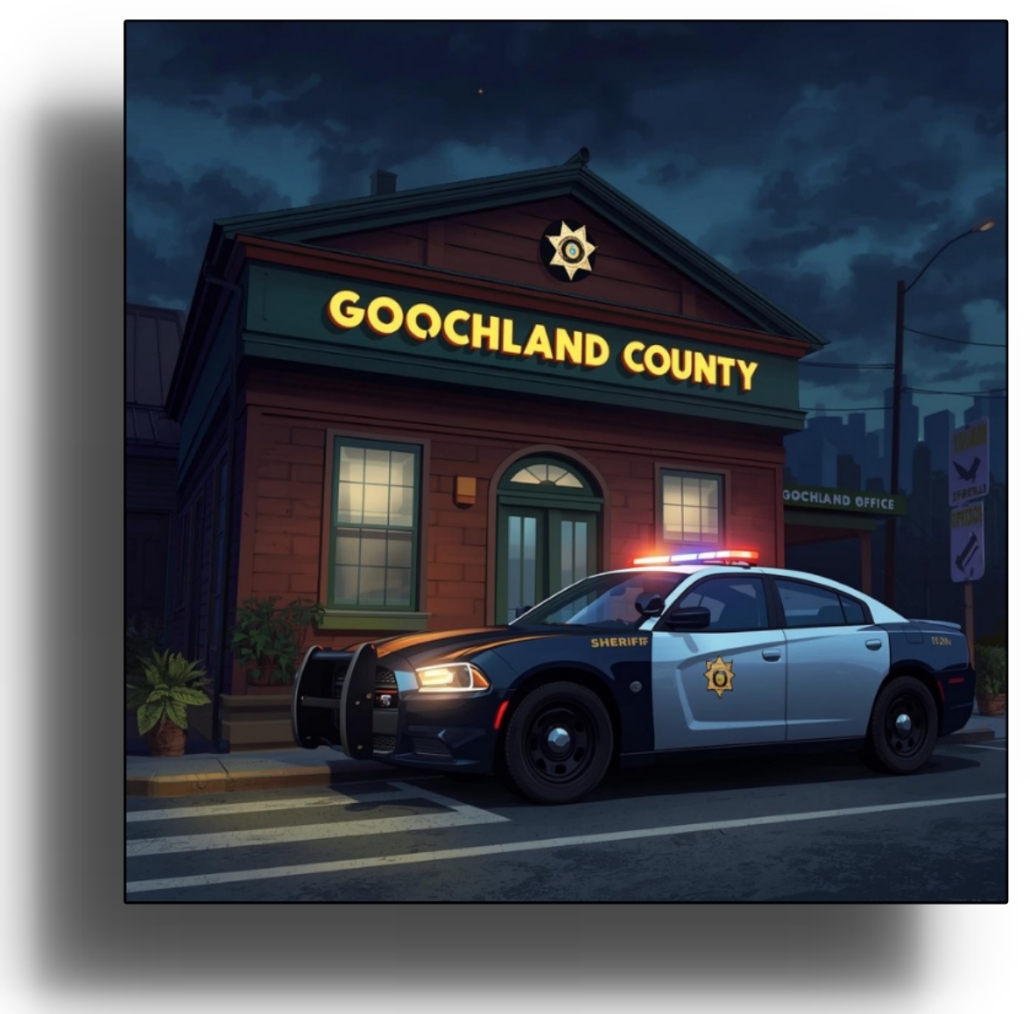
The sheriff and his deputies provide public safety and law enforcement services, including maintaining a 911 call center, conducting community outreach and education, providing 24-hour patrol, responding to criminal complaints, conducting criminal investigations, enforcing traffic laws, and more. In addition, they are responsible for court security, prisoner movement, and the enforcement of court orders.
The Goochland County Sheriff’s Office is the type of agency most folks think of when picturing a sheriff’s office.
Understanding the Variations
Understanding these variations between agencies is crucial to understanding American law enforcement. There’s no single template, no universal sheriff’s office that looks and operates the same from county to county or state to state. Each jurisdiction designs the functions of its sheriff’s office to meet local needs, local laws, and local expectations.
What remains constant is this: one sheriff, elected by the people, carrying the weight of that office and the trust of those who put them there, supported by deputies who do the daily work of keeping the peace, serving the courts, and maintaining that thin line between order and chaos that defines civilized society.
So, the next time you see a patrol car rolling past with “Sheriff” emblazoned on the side, remember: unless the boss is behind the wheel, that’s a deputy doing the work. And somewhere, probably buried in paperwork or meeting with county commissioners or dealing with a jail overcrowding crisis, is the sheriff carrying the responsibility for it all, carrying a tradition that stretches back to medieval England and those first shire reeves who kept the king’s peace and collected his taxes and tried to maintain some semblance of order.
And, at the end of the day, after all the door-kicking, handcuffing, court-protecting, and prisoner-watching, hopefully there’s time for Nesselrode pie, and enough leftover energy to pick and sing a chorus or two of There Is a Time, or Salty Dog.
The above list of sheriff’s responsibilities is not all-inclusive. Sheriffs and deputies are responsible for numerous duties and assignments in addition to those listed here.
Is It Sheriff’s Office or Sheriff’s Department? What’s the Difference?
 Black’s Law Dictionary defines the terms as:
DEPARTMENT: “One of the major divisions of the executive branch of the government … generally, a branch or division of governmental administration.”
OFFICE: “A right, and correspondent duty, to exercise public trust as an office. A public charge of employment … the most frequent occasions to use the word arise with reference to a duty and power conferred on an individual by the government, and when this is the connection, public office is a usual and more discriminating expression … in the constitutional sense, the term implies an authority to exercise some portion of the sovereign power either in making, executing, or administering the laws.”
A Sheriff’s Office is not a “department” of county government. The functions and operation of an Office of Sheriff are entirely and solely the responsibility of the elected Sheriff. The Sheriff is a statutory/constitutional officer who has exclusive powers and authority under state law and/or state constitution. Therefore, a sheriff’s powers are not subject to the directives and orders of a local county government, whereas the heads of county departments are subordinate to the local administration because each department is a division of county government.
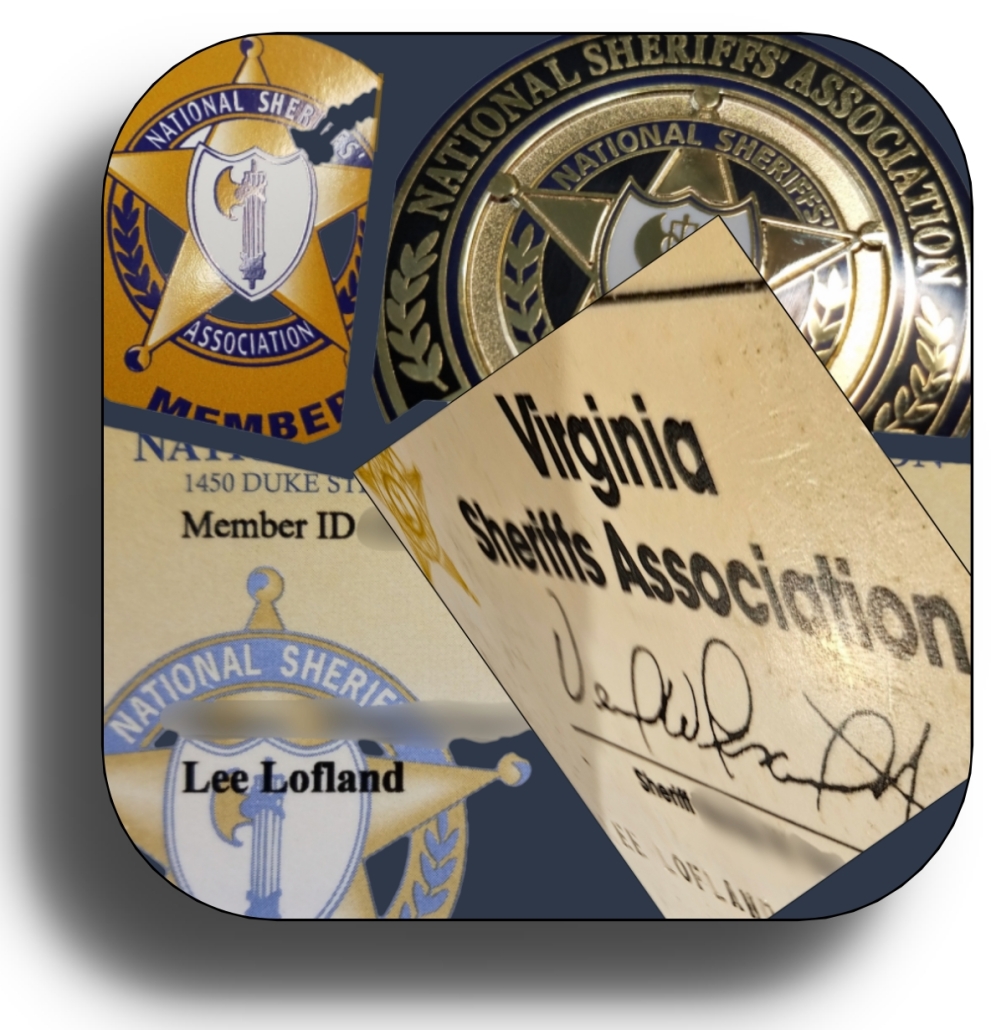
National Sheriffs’ Association
The National Sheriffs’ Association (NSA) officially came into being when the organization filed Articles of Incorporation in 1940. However, over 50 years earlier, in 1888, a group of sheriffs in Minnesota and surrounding states joined together to form the Inter-State Sheriffs’ Association. The NSA today is the result of the early group.
The NSA is involved in and provides resources, various programs, training classes, and courses to support and assist sheriffs, deputies, and others in law enforcement and criminal justice.
As of February 15, 2023, NSA has 13,628 active members.
I am one of those members and have been for many years.
Office of Sheriff – Its Historical Roots
“In England, the sheriff came into existence around the 9th century. This makes the sheriff the oldest continuing, non-military, law enforcement entity in history.
In early England, the land was divided into geographic areas between a few individual kings—these geographic areas were called shires. Within each shire there was an individual called a reeve, which meant guardian. This individual was originally selected by the serfs to be their informal social and governmental leader. The kings observed how influential this individual was within the serf community and soon incorporated that position into the governmental structure. The reeve soon became the King’s appointed representative to protect the King’s interest and act as mediator with people of his particular shire. Through time and usage, the words shire and reeve came together to be shire-reeve, guardian of the shire, and eventually the word sheriff, as we know it today.” – National Sheriffs’ Association